
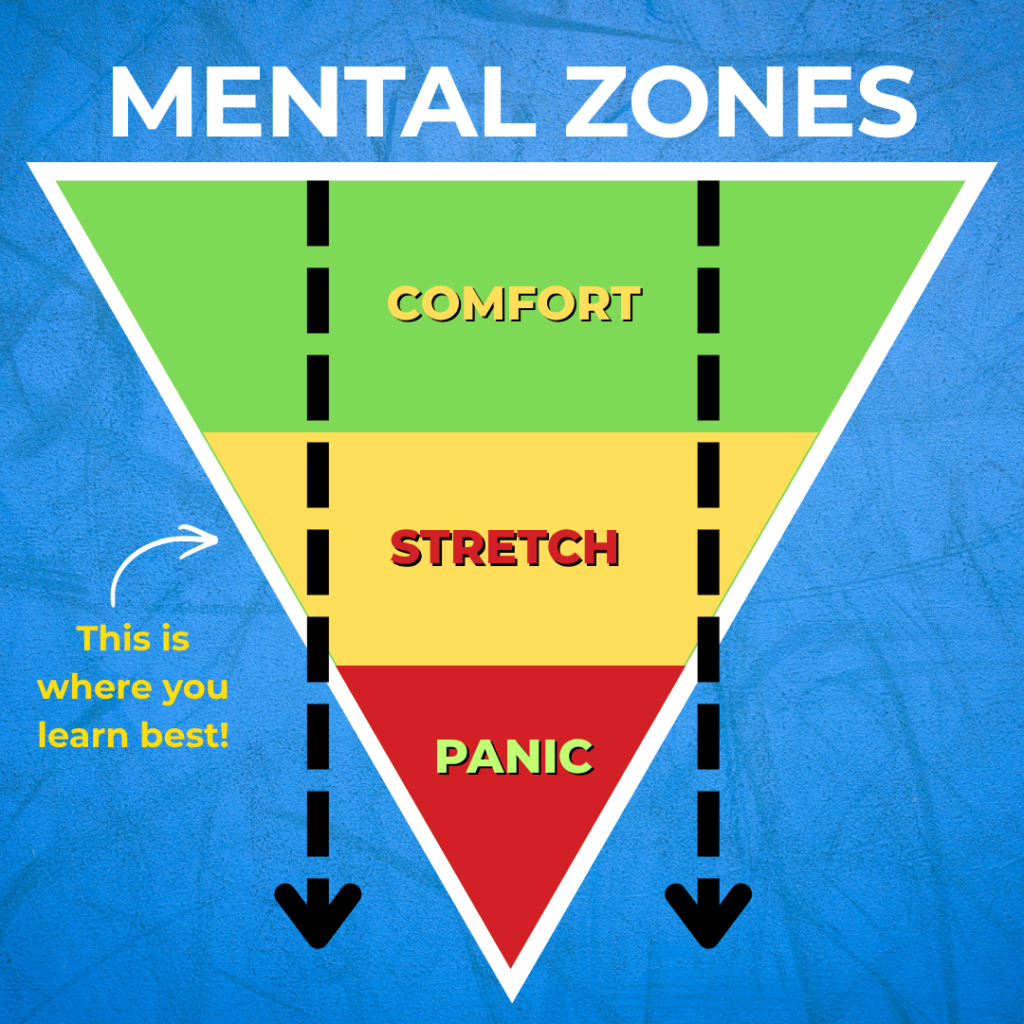
We often talk about stepping out of our comfort zones, but what does this all actually mean and is it possible to push yourself too far?
Your comfort zone is not a physical space (though some spaces can push us out of our comfort zone such as a stage, parties, sports competitions, etc.). Instead, your comfort zone is a category of tasks, spaces, people, and more in your own mind that you consider to be comfortable to experience (hence the name!). Think of a relaxing situation for yourself; perhaps it’s curled up on your sofa with a good book, or maybe it’s building a sandcastle at the beach with your closest friends – the relaxing situation you are picturing is a good example of your comfort zone!
The things in this mental category are often low stress, require less processing for your brain, and if people exist in this space for you, it is often your closest family members or friends. It’s all the things that make you feel calm and able to enjoy life. Every person’s comfort zone is different. This is why for some people they feel refreshed and relaxed after meeting friends, and for others that exact same situation would feel overwhelming.
So, why does leaving our comfort zone feel so scary? This is because every person has a second mental category. This one, opposite to the comfort zone, is called the Panic Zone. As its name implies, within these situations you will find your breathing growing faster, your hands might start to sweat, and your knees might get a bit like jelly. At this stage you are no longer able to process information properly, you might find it hard to follow instructions, and your body will have switched into a dangerous fight or flight mode. Nothing about this situation is positive. Individuals who find themselves in this zone often find it even harder to return/explore the same situation in the future.
But if leaving our comfort zone is so negative, why would we ever do it then? Why would we not keep ourselves in that safe space forever? How could being scared or stressed benefit us?
Thankfully, there isn’t just comfort or panic; in fact, it would be awfully hard to live our lives if that was the case! Could you imagine if everyone could only ever be perfectly calm or in a full-blown panic? Fortunately, there is one final zone that helps us break this pattern. This zone is known as the Learning Zone (or Stretch Zone to some!). When someone says you should ‘step out of your comfort zone’ this is the zone they are trying to encourage you towards. Within the Learning Zone, you are helping your mind develop something called ‘resilience’. The definition of ‘resilience’ is ‘the capacity to withstand or to recover quickly from difficulties; toughness’ – you can probably understand now why this is so important! By exposing yourself to a mild level of discomfort or stress, scientists believe you can help kickstart your personal growth as it helps you become more confident when approaching a new situation and if you find this new situation challenging you will be able to recover faster.
With that in mind, how can we get ourselves into this Learning Zone without pushing too far and ending up in the Panic Zone? This is something each one of us must learn for ourselves based on our own unique zones, and some people will go through their whole lives without mastering this skill because they haven’t practiced it enough. Let’s go through a scenario! In this example we will use one of our guests who is joining his first session of badminton, let’s call him Theo.
Theo was munching away on his delicious breakfast when he found out his group was going to be playing badminton that day. After this news, he couldn’t finish his meal (normally he would clean his plate… twice!). His friends were acting very excited as they walked to the sports centre, but Theo didn’t feel up for joining in with their laughter. His knees felt a bit weak as he walked to the court. When he got to the top one of his friends excitedly hit the shuttle/birdie towards him, causing Theo’s stomach to jump.
What zone do you think Theo started in? What zone do you think he is in now?
When Theo was happily eating his breakfast (and considering going for a second portion) he was in his comfort zone! This situation and space clearly make him feel at ease. But after finding out the news and heading to the sports centre, Theo began to enter his own personal stretch zone. He was feeling nervous, uncomfortable, and maybe even a little scared. We know this because Theo is no longer talking to his friends, and isn’t showing any of the same excitement about this activity. It’s easy to guess that this new sport is not in Theo’s comfort zone.
So how can we help Theo explore his stretch zone in a safe way? When statements like “Just do it!”, or “I did it, so you’ll be fine!” are spoken when someone is facing a situation outside of their comfort zone: This could potentially be harmful to the individual’s success. These statements encourage the individual to dismiss the alarm bells that are ringing in their head which are designed to keep away from a state of panic. Instead, we recommend trying statements/comments like;
- You’re being so brave!
- What do you this is a good goal for your first session?
- Do you remember how I did _____? That really helped me get more comfortable with the sport!
- You’ve done a great job today!
By not diminishing their successes through statements about what they haven’t/cannot achieve and focusing instead on the small goals and successes they do have, can help the individual feel confident to continue in their stretch goal without feeling the need to go past it and end up very stressed and panicked. So next time you see a friend looking a bit nervous or unsure, try changing your strategy and see if you can help them stay within their stretch zone. They will thank you for it!
Are you ready to get into your stretch zone? Snag yourself a court or pitch today!